Parliament Passes Finance Bill 2026, Raises Tax-Free Income Threshold to Tk400,000
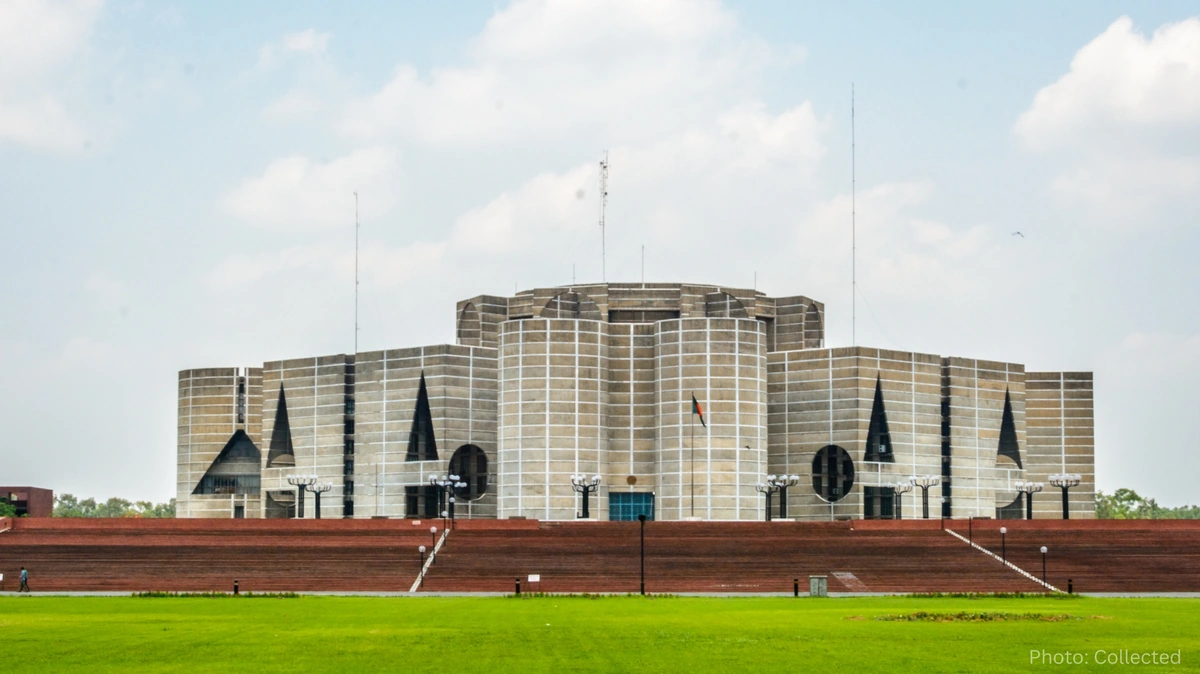
Bangladesh's Parliament has approved the Finance Bill 2026 with 64 amendments, increasing the annual tax-free income threshold to Tk400,000, withdrawing provisions that critics said could facilitate the legalization of undisclosed wealth, and revising several tax and VAT measures ahead of the 2026–27 fiscal year.
Bangladesh's Parliament on Monday passed the Finance Bill 2026 by voice vote, providing the legal framework for implementing the national budget for the 2026–27 fiscal year. The legislation introduces several significant changes to the government's original budget proposals, including a higher tax-free income threshold, revisions to VAT rates, and the withdrawal of several controversial provisions.
Finance Minister Amir Khasru Mahmud Chowdhury placed the bill before the House for final approval after an extensive debate on its general principles and a review of recommendations submitted by lawmakers. Following lengthy discussions, Parliament approved the bill with a total of 64 amendments.
One of the most notable revisions concerns the individual income tax exemption limit. While the proposed budget had initially set the tax-free annual income threshold at Tk375,000, lawmakers approved an amendment increasing the limit to Tk400,000. The revision is expected to provide additional tax relief for individual taxpayers.
Parliament also withdrew the proposal that would have made a Tax Identification Number (TIN) mandatory for opening bank accounts. As a result, individuals will continue to be able to open bank accounts under the existing rules without obtaining a TIN.
Another major amendment involved the removal of a provision relating to property valuation that had drawn criticism from economists and policy observers. The original proposal aimed to address differences between official land values and actual market prices during property transactions. However, critics argued that the mechanism could create an opportunity to legalize undisclosed or unreported wealth. Following the concerns, the government removed the provision from the final version of the Finance Bill.
The House also withdrew the proposed requirement for mandatory TIN submission during the registration, transfer, inheritance, and mutation of land and apartment properties within city corporations and municipalities.
The legislation introduced changes to corporate taxation as well. The tax rate on private universities has been reduced from the proposed 10 percent to 5 percent following amendments approved during the parliamentary session.
In another significant revision, the proposed 15 percent Value Added Tax (VAT) on advertisements placed through online video platforms, social media services, and search engines has been reduced to 5 percent. The move is expected to lessen the tax burden on businesses and advertisers operating in the digital sector.
The Finance Bill also introduces a revised VAT framework for jewellery made from gold, silver, platinum, and diamonds. In addition, a source tax of 50 paisa has been imposed on purchases of these precious metal ornaments.
Several industry-specific tax measures have also been incorporated into the legislation. VAT imposed at the supplier level on fish distribution has been withdrawn, while the VAT previously levied on revenue-sharing arrangements involving the telecommunications regulator has also been removed.
To support domestic industries, the government has reduced or eliminated customs duties and taxes on the import of raw materials used in several sectors, including shrimp processing, pharmaceuticals, electrical wire manufacturing, PVC and PET resin production, refined copper, and fire safety equipment.
The Finance Bill further introduces a new measure for listed companies. Firms that distribute less than 30 percent of their after-tax net profits as dividends will be required to pay an additional 10 percent tax on the undistributed portion. However, banks, insurance companies, and other financial institutions have been exempted from this provision.
In an effort to strengthen financial transparency, the legislation also makes audited financial statements mandatory for businesses and associations that exceed specified thresholds for annual turnover or capital.
The national budget for the 2026–27 fiscal year was originally presented in Parliament on 11 June by Finance Minister Amir Khasru Mahmud Chowdhury. Following parliamentary scrutiny and multiple amendments, the Finance Bill has now been approved, paving the way for the implementation of the government's fiscal policies for the upcoming financial year.
Related News





You may like




Tom Holland Says Marvel Has a Plan for the Next Spider-Man
August 1, 2026
Elected News
-
Bangladesh Seeks UN Women Support on Digital Harassment and Women’s Empowerment
-
Bangladesh, Australia Discuss Human Trafficking, Irregular Migration and Rohingya Crisis
-
Bangladesh Plans Internet-Free Access to Mobile Banking and Financial Apps
-
DU to Open Undergraduate Admission Applications on 11 November, Tests Begin 5 December


