Rooftop Mango Garden in Dhaka Produces Over 5 Maunds of Fruit Annually, Showcasing Urban Agriculture
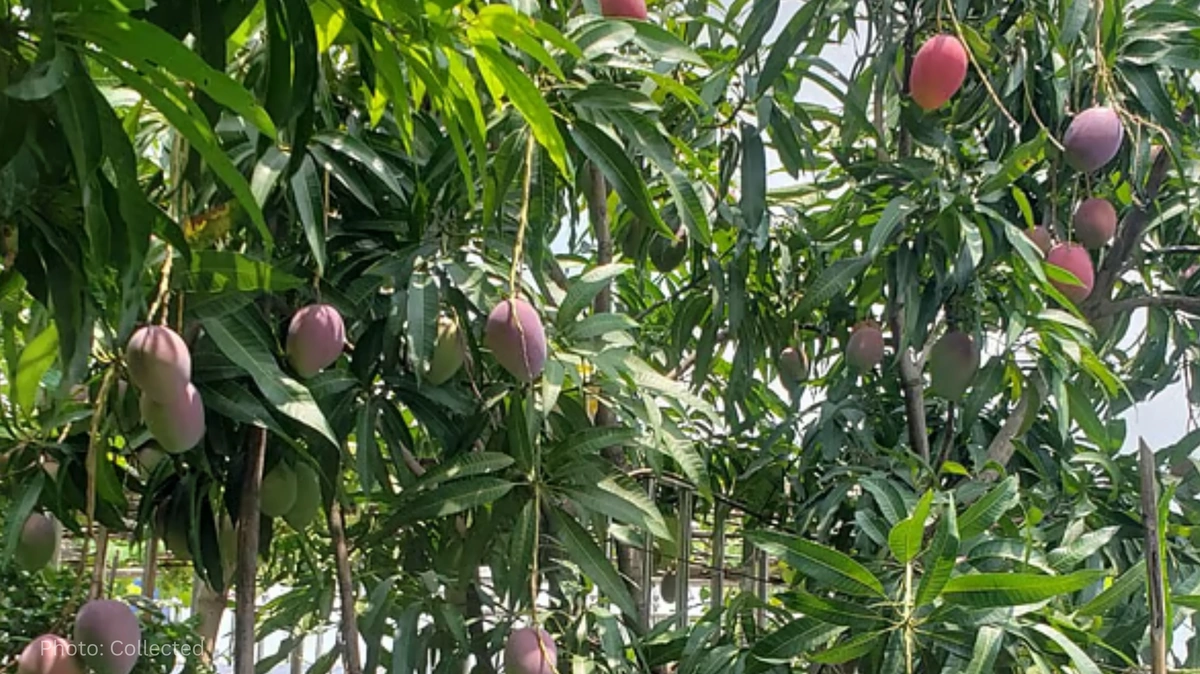
A six-story rooftop garden in Dhaka’s Middle Badda area has become a thriving hub of mango cultivation, producing dozens of varieties including rare international species, with this year’s yield reaching around 5–6 maunds despite unexpected challenges.
In the heart of Dhaka’s Middle Badda along Baishakhi Sarani, a six-story residential building named “Sobuj Chhaya” has quietly transformed into one of the city’s most remarkable examples of urban rooftop farming. What appears from the outside as a typical urban residence is, in reality, a lush green sanctuary where mango trees of numerous varieties flourish across the rooftop, producing significant seasonal harvests each year.
The rooftop garden is maintained by couple Asma Kadir and Md. Abdul Kadir, who began their journey of rooftop gardening in 2010. Although the building itself was constructed in 2007, it was three years later that the rooftop was first converted into a cultivated green space. What started with just two all-season mango saplings has now evolved into a diverse orchard containing 26 different mango varieties from both local and international origins.
Over the years, the rooftop has become home to popular Bangladeshi mango varieties such as Amrapali, Himsagar, Haribhanga, Guti, and Kanchamitha, alongside hybrid and high-yield cultivars like Bari-4, Banana Mango, Chiang Mai, and Red Palmer. Among the most notable additions is the rare Japanese Miyazaki mango, often referred to as one of the world’s most expensive mango varieties due to its premium quality and appearance.
This year’s production has been particularly notable. Despite variations in weather conditions and natural challenges, the rooftop garden produced approximately 5 to 6 maunds of mangoes. Remarkably, a single Chiang Mai mango tree alone contributed nearly 2 maunds of fruit, highlighting the productivity that well-maintained rooftop gardens can achieve in urban environments.
However, the season was not without setbacks. As the fruit matured and increased in size, several branches were unable to withstand the weight of the developing mangoes. Without any major storms or external disturbances, the natural load of fruit caused certain branches to break and fall. While this resulted in some loss, the damaged and fallen mangoes were later repurposed for making pickles, allowing the gardeners to recover value from what initially appeared to be a setback.
The rooftop garden is divided into two main sections. The lower section hosts a dense collection of mango varieties including Amrapali, Banana Mango, Himsagar, Haribhanga, and Kanchamitha, forming a vibrant green canopy. A staircase leads to the upper section, where more specialized and premium varieties are cultivated, including the Thai Katimon mango and the highly prized Miyazaki mango.
As the fruits mature, the rooftop transforms visually, with clusters of mangoes hanging beneath thick green foliage. Some trees have grown so large and dense that harvesting requires careful climbing or the use of bamboo poles to reach the upper branches. Despite the challenges, the garden continues to produce abundant fruit each season, becoming a model of urban agricultural potential in a densely populated city like Dhaka.
Interestingly, not all mangoes are harvested by the owners. A significant portion is left on the trees for birds, which freely feed on the ripe fruit. The birds often consume the mangoes in such a way that only the seeds remain attached to the branches. The garden owners have chosen not to install protective nets, allowing birds to share in the harvest as part of their natural habitat.
According to Asma Kadir, this decision reflects her philosophy toward nature and coexistence. She describes the birds as guests of the garden and believes they also have a rightful share in the environment. This approach has made the rooftop garden not only a productive agricultural space but also an informal ecological habitat within the city.
The maintenance of the garden is largely handled by Asma Kadir herself. Without the convenience of an elevator in the building, she climbs six floors daily to care for the plants. Her responsibilities include watering, applying organic fertilizers, cleaning weeds, and monitoring the overall health of each tree. Her consistent care has been central to the garden’s long-term success and productivity.
Among all the varieties, Amrapali trees currently dominate the rooftop landscape. Their fruits are visible in clusters, gradually changing color from green to yellow-green as they ripen. The density of the trees has increased significantly over time, making the rooftop appear like a miniature forest suspended above the city.
The garden has also become an inspiration for neighbors and local residents. Many visitors come to observe the rooftop orchard and seek advice on how to start their own gardening projects. Asma Kadir often encourages beginners to combine local mango varieties with high-yield all-season types such as Katimon, Bari-11, and Punai, which are suitable for rooftop cultivation and urban environments.
Beyond its agricultural output, the rooftop garden represents a broader shift in how urban residents in Dhaka are engaging with green spaces. In a city where land is limited and greenery is often scarce, such initiatives demonstrate how rooftops can be transformed into productive ecosystems that contribute to food production, environmental balance, and community inspiration.
Today, the “Sobuj Chhaya” rooftop garden stands as a living example of dedication, patience, and sustainable urban farming. What began as a modest gardening effort has grown into a diverse mango orchard producing thousands of fruits annually, while also fostering biodiversity and community interest in rooftop agriculture across Dhaka.
Related News

You may like




Tom Holland Says Marvel Has a Plan for the Next Spider-Man
August 1, 2026
Elected News
-

Bangladesh Seeks UN Women Support on Digital Harassment and Women’s Empowerment
-

Bangladesh, Australia Discuss Human Trafficking, Irregular Migration and Rohingya Crisis
-

Bangladesh Plans Internet-Free Access to Mobile Banking and Financial Apps
-
DU to Open Undergraduate Admission Applications on 11 November, Tests Begin 5 December


