World Bank: 36 Million People Living in Poverty
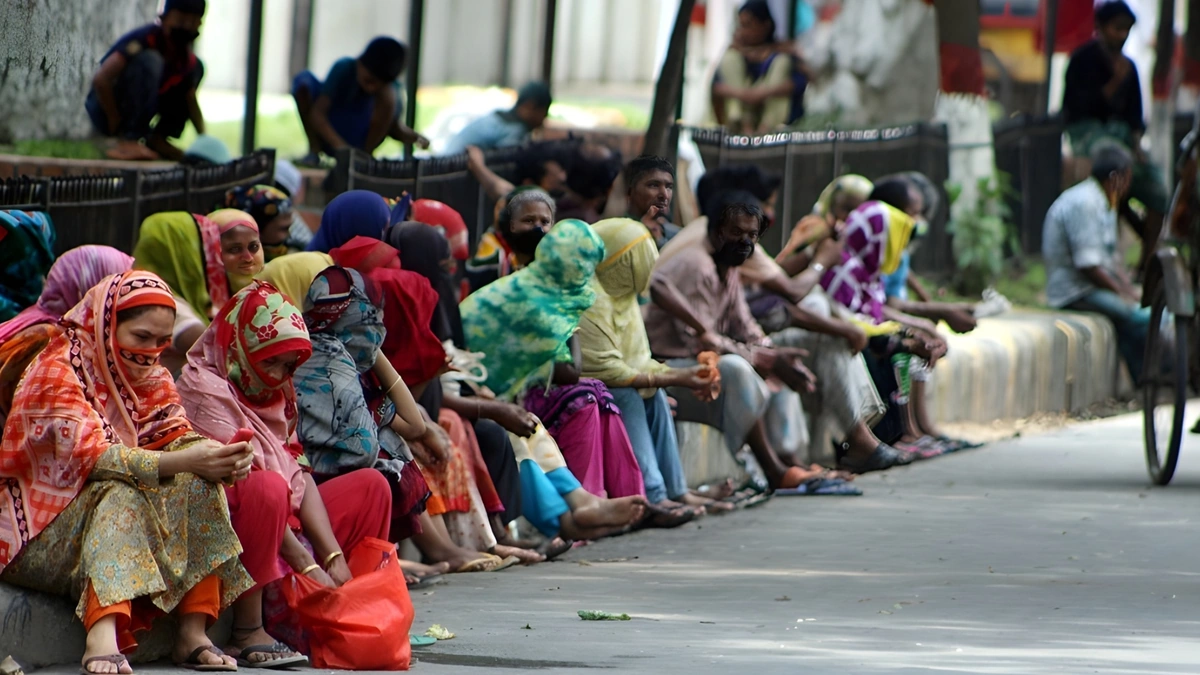
Bangladesh is moving in the opposite direction when it comes to reducing poverty. The World Bank says the country’s poverty rate has been rising for the past four years.
According to the organization’s estimates, the poverty rate in 2025 may be slightly above 21 percent. The number of poor people in the country has reached 36 million.
A large share of the population lives just above the poverty line. Because of various shocks such as high inflation many of them are at risk of falling below the poverty line. According to the World Bank, this vulnerable population stood at 62 million in 2022.
In Bangladesh, poverty rates are calculated by the Bangladesh Bureau of Statistics (BBS). The data comes from the Household Income and Expenditure Survey (HIES). The latest HIES was conducted in 2022, when the overall poverty rate was 18.7 percent.
The World Bank figure is essentially an estimate generated using a method called the “micro-simulation model.” The Bank says it assessed poverty using this model based on labor-market dynamics, remittances, and government subsidy spending.
The World Bank presented its new poverty estimates in a report titled “Bangladesh: Poverty and Inequality Assessment-Advancing on the Road to Prosperity.” The report was released yesterday, Tuesday, at a hotel in Dhaka, followed by a discussion event.
Bangladesh had made significant progress in reducing poverty since the 1990s (the poverty rate was 56.7 percent in 1991–92). After 2000, poverty reduction accelerated further. Bangladesh gained global recognition for its success. But recent trends show that the country is now moving backward in this regard.
The World Bank report was released jointly by the Bank and the Policy Research Institute (PRI).
Hossain Zillur Rahman, Executive Chairman of PPRC, attended as the chief guest. Discussing past achievements in poverty reduction, he said that the years from 2022 to 2025 have unfortunately been a period of “reverse turning.” World Bank data shows that this is not a sudden decline but a reflection of reality the poverty rate has increased.
PPRC itself released a poverty survey in August. It reported that in 2025, the overall poverty rate rose to 27.93 percent.
According to the World Bank, the monthly per capita income threshold for the lower poverty line is Tk 2,750, and for the upper poverty line Tk 3,832.
Senior World Bank economist Sergio Oliveira presented key findings from the report. The main drivers of rising poverty, he said, include insufficient job creation, job losses, high inflation, and stagnant wages. The Bank noted that Bangladesh lost 2 million jobs between 2023 and 2024. An additional 800,000 jobs may be lost in 2025. Women and youth have been hit hardest by the shrinking job market.
The World Bank believes Bangladesh’s economic growth trajectory has changed since 2016. While about 1.5 million jobs have been created annually, 63 percent of them were in agriculture a sector with low wages. Urban job creation has remained largely stagnant.
“This is not a sudden fall; this is the reality-poverty has increased.”
—Hossain Zillur Rahman, Executive Chairman, PPRC
The rich benefit more from social protection
The government’s social safety-net programs benefit the wealthy more than the poor. According to the World Bank, in 2022, only half of the poorest 20 percent of households received social assistance, while 35 percent of the richest 20 percent also received such benefits.
The World Bank notes that although Bangladesh has increased spending in the social sector, weaknesses in beneficiary selection significantly diminish its impact. Due to structural problems in subsidy distribution, relatively affluent families receive more benefits, limiting progress in reducing poverty and inequality.
Although the coverage of social protection programs has expanded, management and beneficiary selection remain inefficient. In urban areas, the share of households receiving social assistance increased from 16 percent in 2010 to 34.5 percent in 2022. This expansion is significant, but benefits still often go to the better-off.
The World Bank warns that climate-related risks could undermine Bangladesh’s achievements in reducing poverty and regional inequality.
13 million people may be displaced by 2050
The Bank says that climate change could displace 13 million people by 2050 and reduce the contribution of agriculture to GDP by up to one-third.
Bangladesh has made notable progress in reducing regional disparities, especially the east–west divide. From 2010 to 2022, poverty fell faster in the western region and other high-poverty areas. But climate risks may increase regional inequality in the future. Floods and droughts disproportionately affect rural households, and their ability to recover depends heavily on local infrastructure and institutional capacity.
Economist Selim Raihan said that many institutions have reported rising poverty in recent years, but BBS remained silent.
Four recommendations
To accelerate poverty reduction, the World Bank made four recommendations:
-
Strengthen employment generation in productive sectors;
-
Expand decent work opportunities for the poor and vulnerable;
-
Build effective market systems for the rural poor;
-
Enhance resilience through equitable and efficient fiscal policies.
At the event, Hossain Zillur Rahman analyzed Bangladesh’s poverty trends across three periods. He described 2010–2016 as a period of continued momentum. From 2016 to 2022, the pace of poverty reduction slowed. During this time, a new political economy emerged debt-driven infrastructural expansion overshadowed everything else, corruption-based incentives replaced rule-based governance, and the erosion of political democracy weakened economic democracy.
He described 2022–2025 as a period of “reverse turning,” saying:
“We are now at multiple crossroads LDC graduation, middle-income transition, restoration of elected government. But how prepared are we?”
World Bank Country Director Jean-Pascal Pame stressed that traditional approaches will not be enough to accelerate poverty reduction. Jobs must be created for youth, women, and vulnerable groups.
Following the presentation, economists discussed the report. The session was moderated by Selim Raihan, Executive Director of SANEM. He pointed out that multiple studies show rising poverty in recent years, but BBS did not acknowledge it.
CPD Distinguished Fellow Mostafizur Rahman said sustainable poverty reduction initiatives are needed. The government’s White Paper Committee has already made several recommendations for sustainable growth—also reflected in the World Bank’s report.
BIDS Director General Enamul Haque said that government investment plays a vital role in poverty reduction, and the agriculture sector should be strengthened, as 42 percent of the population depends on it.
Dhaka University Pro-Vice Chancellor Saima Haque Bidisha stressed the need for decent jobs to raise incomes and reduce poverty.
Uzma Chowdhury, Director of PRAN-RFL Group, highlighted the importance of improving access to finance for entrepreneurs. She said law-and-order conditions also influence poverty reduction.
World Bank officials, including Regional Practice Director Sebastian Eckardt, also spoke at the event.
Related News


You may like




Tom Holland Says Marvel Has a Plan for the Next Spider-Man
August 1, 2026
Elected News
-
Bangladesh Seeks UN Women Support on Digital Harassment and Women’s Empowerment
-

Bangladesh, Australia Discuss Human Trafficking, Irregular Migration and Rohingya Crisis
-

Bangladesh Plans Internet-Free Access to Mobile Banking and Financial Apps
-
DU to Open Undergraduate Admission Applications on 11 November, Tests Begin 5 December


