Dhaka Set to Remove Auto-Rickshaws from Major Roads Under New Traffic Policy
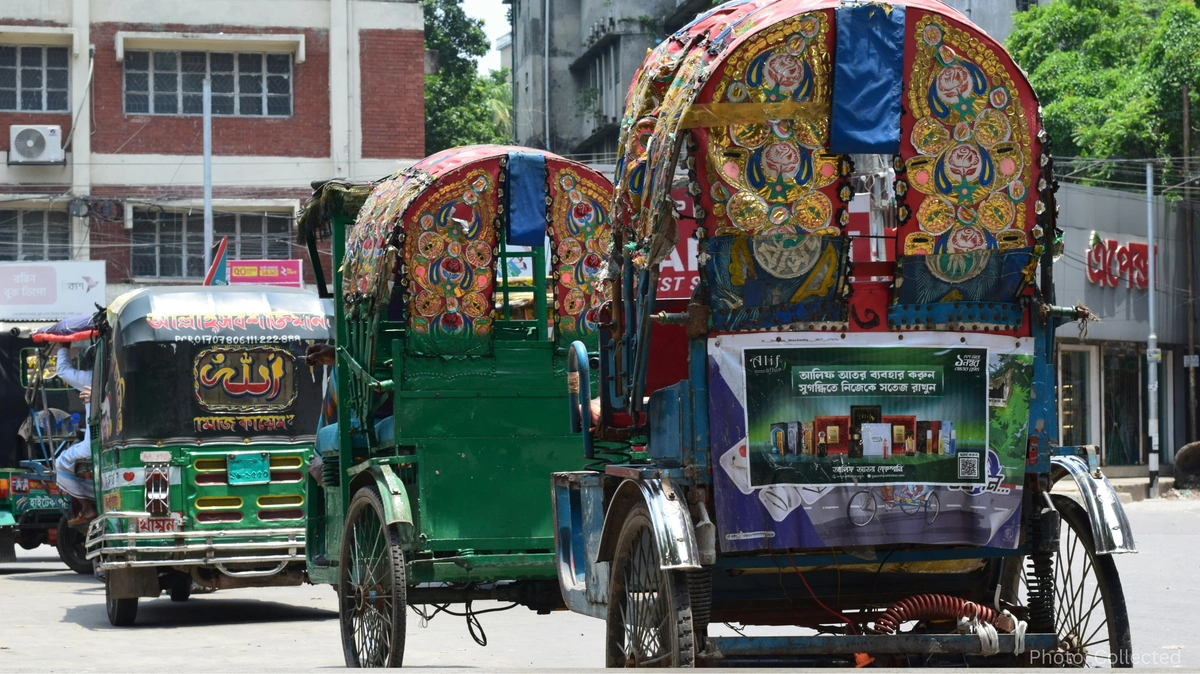
The government and Dhaka Metropolitan Police have reached a policy-level consensus to gradually remove battery-powered auto-rickshaws from the capital’s major roads as part of efforts to improve traffic discipline and enhance road safety.
The Bangladesh government and the Dhaka Metropolitan Police (DMP) have taken a policy-level decision to phase out the movement of battery-powered auto-rickshaws from major roads across the capital, aiming to improve traffic management and restore order to Dhaka’s increasingly congested transportation network.
The decision comes as authorities continue to implement artificial intelligence (AI)-based traffic monitoring systems throughout the city. According to officials, the introduction of AI-powered cameras has significantly improved compliance with traffic regulations among registered vehicles. However, uncontrolled movement of auto-rickshaws remains a major challenge for traffic management authorities.
Sources within the DMP Traffic Division said multiple discussions have recently been held between government agencies and law enforcement officials regarding the growing number of auto-rickshaws operating on Dhaka’s roads. During these meetings, officials reviewed the impact of the vehicles on traffic flow, road safety, and enforcement challenges.
Although a final administrative order has yet to be issued, both government representatives and traffic authorities have reportedly expressed support for removing auto-rickshaws from the capital’s primary roads in an initial phase. A high-level meeting involving senior government officials is expected next month to finalize the implementation strategy.
According to officials familiar with the discussions, if final approval is granted by the government, authorities will begin by restricting auto-rickshaw operations on major arterial roads before gradually expanding enforcement measures to other parts of the city.
Traffic officials argue that battery-powered auto-rickshaws present unique enforcement challenges. A large number of these vehicles operate without valid registration, official number plates, or licensed drivers, making it difficult to identify offenders and enforce traffic laws through AI-based monitoring systems.
Since the installation of AI cameras at key intersections and traffic points, authorities have reported a reduction in violations such as running red lights, crossing stop lines, driving against traffic, and sudden lane changes among registered vehicles. The cameras enable traffic police to identify violators and issue electronic prosecutions, encouraging greater compliance with road regulations.
However, officials say the same system has been far less effective in dealing with auto-rickshaws due to the absence of vehicle registration records and identifiable ownership information. As a result, many operators continue to ignore traffic signals, drive in the wrong direction, and pick up or drop off passengers at unauthorized locations.
Data collected by the DMP Traffic Division reportedly shows that violations involving auto-rickshaws have remained largely unchanged despite broader improvements in traffic discipline. Authorities believe that meaningful progress in reducing congestion and improving road safety will be difficult unless the sector is brought under stricter regulation.
Law enforcement officials have also raised concerns about the sheer number of auto-rickshaws currently operating in Dhaka. They argue that the traffic department lacks sufficient manpower to conduct continuous enforcement operations against such a large fleet while simultaneously managing other traffic responsibilities across the city.
In addition to traffic-related concerns, police officials have linked some auto-rickshaw operations to broader public safety and security challenges. Authorities say stronger regulation of the sector could help address both transportation and law enforcement concerns.
DMP Additional Commissioner (Traffic) Mohammad Anisur Rahman confirmed that discussions regarding auto-rickshaw regulation have taken place at the Ministry of Home Affairs. He noted that while the issue was raised during recent meetings, detailed discussions were postponed due to other agenda items.
Officials expect further deliberations once senior government leaders return from ongoing official engagements abroad. A key meeting is anticipated around mid-next month, where final decisions regarding the future of auto-rickshaw operations on major roads may be taken.
Observers say the proposed move could significantly reshape urban transportation in Dhaka. While supporters argue that stricter controls are necessary to improve traffic discipline and road safety, others emphasize the need to consider the livelihoods of thousands of drivers who depend on auto-rickshaw operations for income.
As authorities prepare for the next phase of discussions, residents and transport stakeholders are closely watching developments that could lead to one of the most significant changes in Dhaka’s urban traffic management policy in recent years.
Related News



You may like




Tom Holland Says Marvel Has a Plan for the Next Spider-Man
August 1, 2026
Elected News
-
Bangladesh Seeks UN Women Support on Digital Harassment and Women’s Empowerment
-
Bangladesh, Australia Discuss Human Trafficking, Irregular Migration and Rohingya Crisis
-
Bangladesh Plans Internet-Free Access to Mobile Banking and Financial Apps
-
DU to Open Undergraduate Admission Applications on 11 November, Tests Begin 5 December


