From Dhaka to the World Cup: Cabo Verde's Historic Debut Jersey Bears the 'Made in Bangladesh' Label
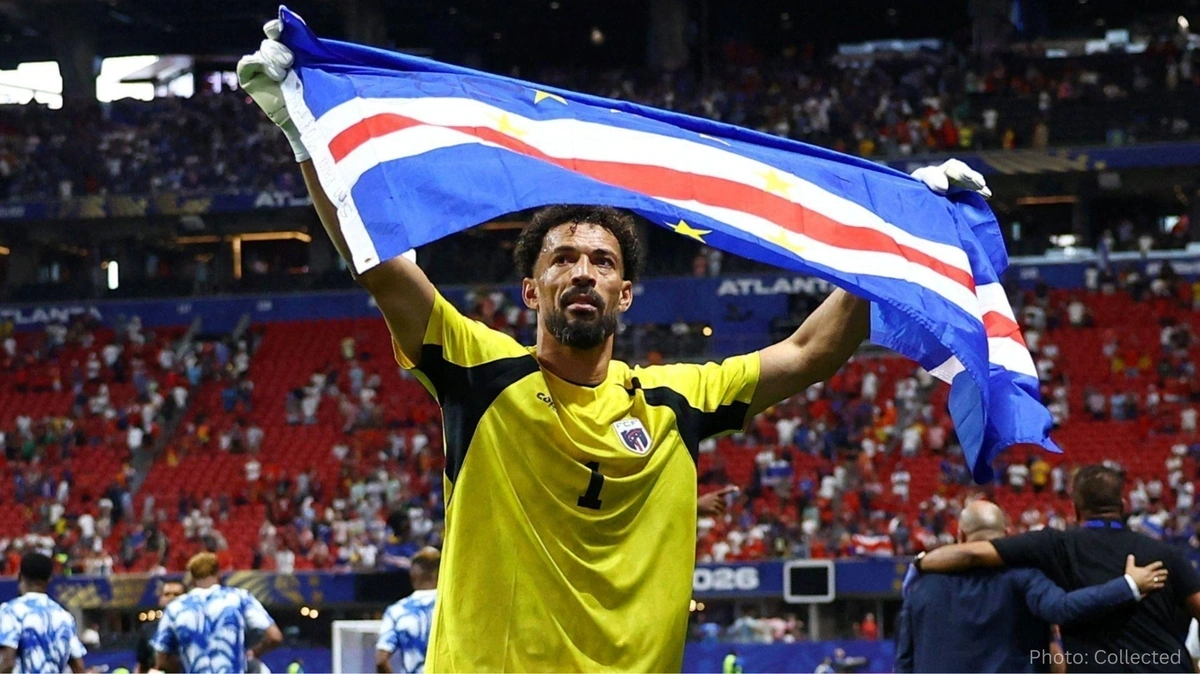
The jerseys worn by Cabo Verde during their first-ever FIFA World Cup match against Spain were manufactured in Bangladesh, highlighting the country's growing footprint in the global sportswear industry and showcasing its role behind one of football's most memorable moments.
Bangladesh's world-renowned garment industry has scored another international milestone after it was revealed that the jerseys worn by Cabo Verde in their historic FIFA World Cup debut were manufactured in Dhaka.
As the West African nation stepped onto football's biggest stage for the first time, earning a remarkable draw against Spain, another success story unfolded quietly behind the scenes one stitched together by Bangladeshi factories and workers.
The national team kits worn by Cabo Verde during the match carried the "Made in Bangladesh" label, according to officials involved in the production process.
Industry sources confirmed that the fabric used to produce the jerseys was manufactured at the Bangladesh facilities of Youngone Corporation, while the final jerseys were assembled at a production unit in Dhaka operated by German sportswear company Capelli Sport.
Soumik Barman, a manager at Garments Manufacturing and Assembling Limited, said the Cabo Verde national team kits had been produced locally and exported under Capelli Sport's orders.
"The Cape Verde national team jerseys were manufactured in Bangladesh and carry the 'Made in Bangladesh' label," he said.
He added that Capelli Sport has been working with the Dhaka-based factory since 2019, with production taking place at its facility located in the Uttara area of the capital.
Officials from Youngone Corporation Bangladesh also confirmed their involvement in the process, stating that the fabric used in the jerseys was produced at their facilities before being supplied to Capelli Sport for final manufacturing.
According to a Youngone official familiar with the matter, the German sportswear brand handled the design and assembly of the national team kits using fabric sourced from Bangladesh.
The revelation places Bangladesh at the heart of one of the most inspiring stories of the 2026 FIFA World Cup.
Cabo Verde, known as the Blue Sharks, entered the tournament as debutants and faced one of football's traditional powerhouses, Spain, in their opening match.
Despite being overwhelming underdogs, the African side produced a disciplined and determined performance to secure a historic 0-0 draw, earning their first-ever point in FIFA World Cup history.
The result immediately became one of the tournament's standout moments.
Spain dominated possession for large stretches of the match and repeatedly threatened to break the deadlock. Their attacking lineup featured several established stars, while teenage sensation Lamine Yamal was introduced in an attempt to unlock Cabo Verde's resilient defence.
However, Cabo Verde captain Vozinha emerged as the hero of the occasion.
The veteran goalkeeper delivered an exceptional display between the posts, producing seven crucial saves to frustrate Spain's attacking efforts.
Among his standout moments was a superb reaction stop to tip a header from Mikel Oyarzabal over the crossbar. He also denied opportunities created by Ferran Torres and Aymeric Laporte, preserving a result that sparked celebrations among Cabo Verde supporters.
The match added another chapter to Vozinha's remarkable career.
At the age of 40, he became the second-oldest player ever to make a FIFA World Cup debut, behind Essam El Hadary, who made his first World Cup appearance at the age of 45.
While Cabo Verde celebrated an unforgettable achievement on the field, Bangladesh could also take pride in its contribution to the global spectacle.
The country's ready-made garment sector has long been recognised as one of the world's leading apparel manufacturing industries, supplying products to major international brands across Europe, North America, and beyond. Yet the appearance of a "Made in Bangladesh" label at football's most prestigious tournament offers a unique symbol of the industry's international reach.
For thousands of Bangladeshi workers involved in textile production, garment assembly, quality control, and export logistics, the jerseys represented more than sportswear. They reflected the craftsmanship, expertise, and industrial capability that continue to position Bangladesh as a vital player in global manufacturing.
As Cabo Verde celebrated a historic point against Spain, Bangladesh quietly shared in the occasion from afar.
On one of football's grandest stages, a nation's dream was carried not only by its players but also by jerseys crafted in Dhaka transforming a World Cup debut into a moment of pride that stretched from the Atlantic coast of Africa to the factory floors of Bangladesh.
Related News
You may like




Tom Holland Says Marvel Has a Plan for the Next Spider-Man
August 1, 2026
Elected News
-
Bangladesh Seeks UN Women Support on Digital Harassment and Women’s Empowerment
-
Bangladesh, Australia Discuss Human Trafficking, Irregular Migration and Rohingya Crisis
-

Bangladesh Plans Internet-Free Access to Mobile Banking and Financial Apps
-
DU to Open Undergraduate Admission Applications on 11 November, Tests Begin 5 December


