Social Media Addiction and Mental Health Raise Growing Concern Among Youth Worldwide
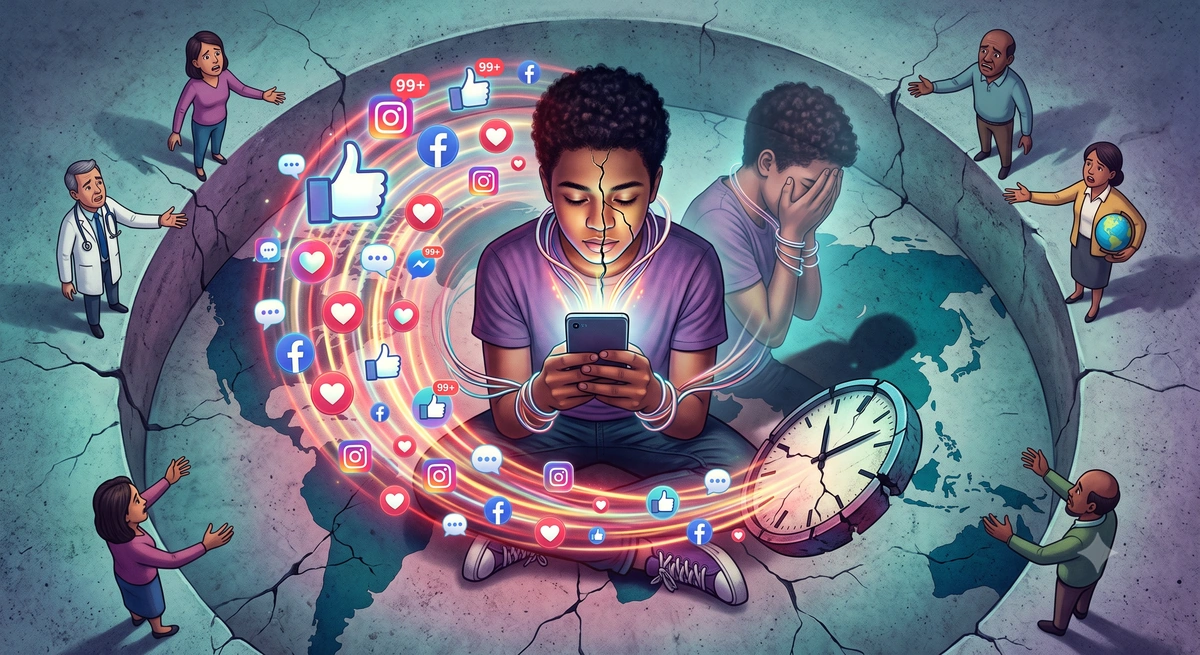
Health experts and researchers warn that excessive social media use is linked to anxiety, depression, sleep disruption and reduced well being, while emphasizing that balanced and responsible use remains key to protecting mental health.
The rapid growth of social media has transformed how people communicate, learn and interact, but health experts are increasingly warning that excessive use of digital platforms is contributing to rising mental health concerns, particularly among adolescents and young adults. Governments, researchers and technology companies are expanding efforts to promote healthier online habits while addressing the risks associated with excessive screen time and addictive platform design.
According to the World Health Organization (WHO), mental health disorders affect nearly one in eight people globally, with anxiety and depression among the leading conditions. While social media itself is not considered a direct cause of mental illness, researchers say excessive use, cyberbullying, social comparison and constant exposure to online content can contribute to emotional distress in vulnerable individuals.
A recent report from the WHO's Health Behaviour in School aged Children study found that problematic social media use among adolescents has increased in several countries. Researchers observed that many teenagers reported difficulty controlling their social media habits, leading to disrupted sleep, reduced physical activity, lower academic performance and increased symptoms of stress and anxiety.
The United Nations Children's Fund (UNICEF) notes that digital platforms also provide important benefits for young people. Social media enables access to education, creative expression, peer support, entrepreneurship and civic engagement. However, UNICEF stresses that these advantages must be balanced with stronger online safety measures, digital literacy and parental guidance to reduce harmful experiences.
International media organizations including Reuters, BBC News, CNN and The Associated Press have reported growing concern among health professionals regarding excessive screen time and addictive platform features. Several countries have introduced or proposed legislation aimed at strengthening online protections for children, increasing transparency in recommendation algorithms and improving parental control tools.
Medical researchers publishing in journals such as The Lancet, JAMA Pediatrics and Nature Human Behaviour describe the relationship between social media and mental health as complex rather than universal. Studies indicate that moderate and purposeful use often helps users maintain friendships and access educational resources, while prolonged passive scrolling and frequent exposure to harmful content are more strongly associated with loneliness, anxiety and depressive symptoms.
Cyberbullying remains one of the most significant challenges. UNICEF estimates that a large number of children and adolescents worldwide have experienced online harassment, including abusive messages, threats, humiliation or the sharing of private information without consent. Mental health specialists warn that victims of cyberbullying face higher risks of emotional distress, reduced self esteem and social isolation.
Sleep disruption has also become a major concern. Health experts recommend limiting screen exposure before bedtime because notifications, blue light and late night social media activity may interfere with healthy sleep patterns. Poor sleep quality has been linked to reduced concentration, mood changes and lower overall psychological well being.
Bangladesh has experienced rapid growth in smartphone ownership and internet access, making social media an important part of everyday life for millions of young people. Platforms are widely used for education, communication, business promotion and entertainment. At the same time, educators and psychologists have expressed concern about increasing cases of online harassment, digital addiction, misinformation and excessive screen time among students.
Government agencies, educational institutions and non governmental organizations have expanded digital awareness campaigns encouraging responsible internet use, online safety and mental health support. Schools and universities are increasingly discussing digital citizenship, responsible online behavior and cyber safety as part of broader awareness initiatives.
Mental health professionals recommend practical steps to reduce the risks associated with excessive social media use. These include setting daily screen time limits, disabling unnecessary notifications, avoiding device use before sleep, taking regular breaks from social media and spending more time on physical activity, hobbies and face to face interaction with family and friends. Parents are encouraged to maintain open communication with children about their online experiences rather than relying solely on restrictions.
Technology companies have also introduced new features designed to encourage healthier digital habits. These include screen time dashboards, usage reminders, parental supervision tools, content filtering systems and enhanced privacy settings. Experts say continued cooperation between governments, technology firms, educators and healthcare professionals will be essential to creating safer digital environments.
As digital technology continues to evolve, specialists emphasize that the objective is not to eliminate social media from everyday life but to encourage balanced, informed and responsible use. They argue that stronger digital literacy, mental health awareness and online safety education will help ensure that social media remains a positive tool for communication, learning and innovation without compromising psychological well being.
According to the World Health Organization (WHO), mental health disorders affect nearly one in eight people globally, with anxiety and depression among the leading conditions. While social media itself is not considered a direct cause of mental illness, researchers say excessive use, cyberbullying, social comparison and constant exposure to online content can contribute to emotional distress in vulnerable individuals.
A recent report from the WHO's Health Behaviour in School aged Children study found that problematic social media use among adolescents has increased in several countries. Researchers observed that many teenagers reported difficulty controlling their social media habits, leading to disrupted sleep, reduced physical activity, lower academic performance and increased symptoms of stress and anxiety.
The United Nations Children's Fund (UNICEF) notes that digital platforms also provide important benefits for young people. Social media enables access to education, creative expression, peer support, entrepreneurship and civic engagement. However, UNICEF stresses that these advantages must be balanced with stronger online safety measures, digital literacy and parental guidance to reduce harmful experiences.
International media organizations including Reuters, BBC News, CNN and The Associated Press have reported growing concern among health professionals regarding excessive screen time and addictive platform features. Several countries have introduced or proposed legislation aimed at strengthening online protections for children, increasing transparency in recommendation algorithms and improving parental control tools.
Medical researchers publishing in journals such as The Lancet, JAMA Pediatrics and Nature Human Behaviour describe the relationship between social media and mental health as complex rather than universal. Studies indicate that moderate and purposeful use often helps users maintain friendships and access educational resources, while prolonged passive scrolling and frequent exposure to harmful content are more strongly associated with loneliness, anxiety and depressive symptoms.
Cyberbullying remains one of the most significant challenges. UNICEF estimates that a large number of children and adolescents worldwide have experienced online harassment, including abusive messages, threats, humiliation or the sharing of private information without consent. Mental health specialists warn that victims of cyberbullying face higher risks of emotional distress, reduced self esteem and social isolation.
Sleep disruption has also become a major concern. Health experts recommend limiting screen exposure before bedtime because notifications, blue light and late night social media activity may interfere with healthy sleep patterns. Poor sleep quality has been linked to reduced concentration, mood changes and lower overall psychological well being.
Bangladesh has experienced rapid growth in smartphone ownership and internet access, making social media an important part of everyday life for millions of young people. Platforms are widely used for education, communication, business promotion and entertainment. At the same time, educators and psychologists have expressed concern about increasing cases of online harassment, digital addiction, misinformation and excessive screen time among students.
Government agencies, educational institutions and non governmental organizations have expanded digital awareness campaigns encouraging responsible internet use, online safety and mental health support. Schools and universities are increasingly discussing digital citizenship, responsible online behavior and cyber safety as part of broader awareness initiatives.
Mental health professionals recommend practical steps to reduce the risks associated with excessive social media use. These include setting daily screen time limits, disabling unnecessary notifications, avoiding device use before sleep, taking regular breaks from social media and spending more time on physical activity, hobbies and face to face interaction with family and friends. Parents are encouraged to maintain open communication with children about their online experiences rather than relying solely on restrictions.
Technology companies have also introduced new features designed to encourage healthier digital habits. These include screen time dashboards, usage reminders, parental supervision tools, content filtering systems and enhanced privacy settings. Experts say continued cooperation between governments, technology firms, educators and healthcare professionals will be essential to creating safer digital environments.
As digital technology continues to evolve, specialists emphasize that the objective is not to eliminate social media from everyday life but to encourage balanced, informed and responsible use. They argue that stronger digital literacy, mental health awareness and online safety education will help ensure that social media remains a positive tool for communication, learning and innovation without compromising psychological well being.
Related News




You may like



Tom Holland Says Marvel Has a Plan for the Next Spider-Man
August 1, 2026
Elected News
-
Bangladesh Seeks UN Women Support on Digital Harassment and Women’s Empowerment
-
Bangladesh, Australia Discuss Human Trafficking, Irregular Migration and Rohingya Crisis
-
Bangladesh Plans Internet-Free Access to Mobile Banking and Financial Apps
-
DU to Open Undergraduate Admission Applications on 11 November, Tests Begin 5 December


