Bangladesh Aims to Become South Asia’s Most Competitive Investment Destination, Says Foreign Minister
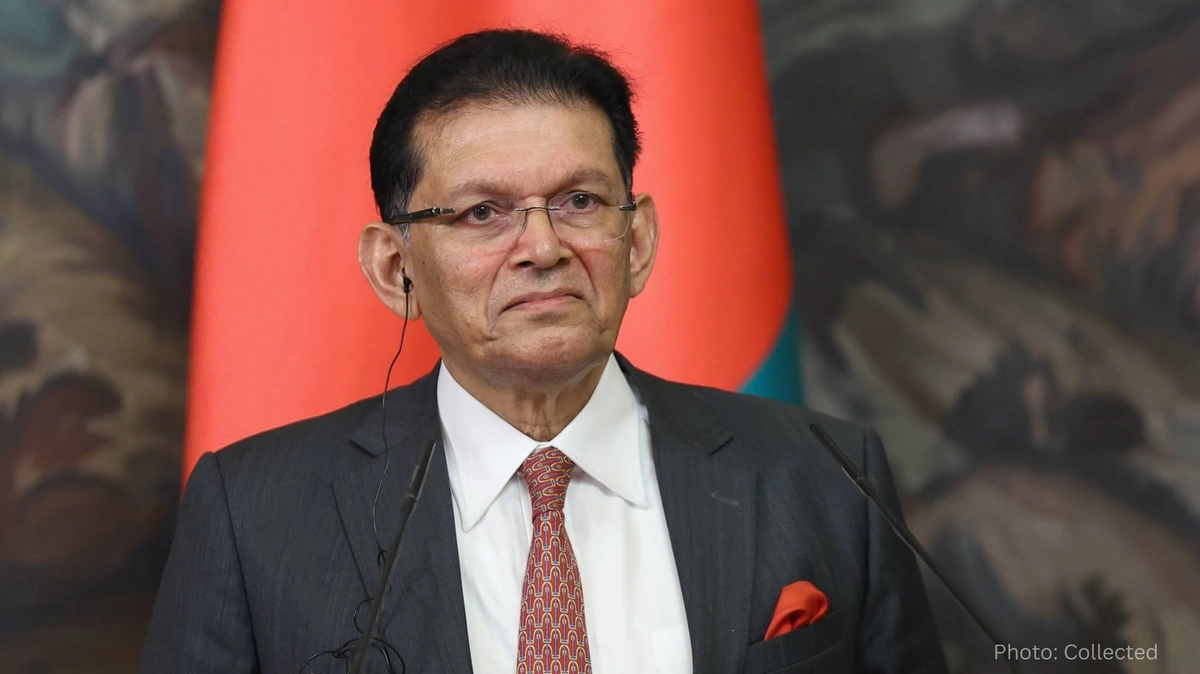
Foreign Minister Dr Khalilur Rahman has outlined an ambitious roadmap to transform Bangladesh into South Asia’s leading investment hub, pledging structural reforms, stronger economic diplomacy, and closer collaboration with global partners to navigate mounting international challenges.
Bangladesh is determined to emerge as the most competitive investment destination in South Asia through deep structural reforms, improved ease of doing business, and strengthened economic diplomacy, Foreign Minister Dr Khalilur Rahman said on Saturday.
Addressing a high-level conference titled "Roadmap for Trade, Growth & Economic Diplomacy 2026: Navigating Risks, Leveraging Resilience" in Dhaka, the Foreign Minister said the government possesses both the political will and strategic vision necessary to unlock the country's full economic potential.
"Our government possesses the political will, the strategic vision, and the unwavering commitment to make Bangladesh the most competitive investment destination in South Asia," he said.
Dr Rahman described the domestic business community as strategic partners in the country's development journey and emphasized the importance of collaboration with international stakeholders. He noted that foreign ambassadors should not merely be viewed as diplomats but as valuable partners capable of contributing to Bangladesh's long-term economic transformation.
"We view every business leader here not just as an investor or a taxpayer, but as a stakeholder in our national success," he said, urging continued dialogue and constructive feedback to rebuild trust and strengthen investor confidence.
The conference, jointly organised by the Ministry of Foreign Affairs and the Bangladesh Investment Development Authority (BIDA), brought together senior government officials, diplomats, development partners, and representatives from the private sector to formulate a forward-looking agenda for Bangladesh's international economic engagement.
State Minister for Foreign Affairs Shama Obaed Islam, Prime Minister's Foreign Affairs Adviser Humaiun Kobir, and Foreign Secretary Asad Alam Siam also addressed the gathering.
Highlighting the government's broader economic agenda, Dr Rahman said Prime Minister Tarique Rahman has outlined a vision centred on three key priorities: stabilising the economy, implementing reforms, and elevating Bangladesh's global standing.
"We need to convert this vision into concrete action in our work on economic and trade diplomacy," the Foreign Minister said.
He acknowledged that Bangladesh faces a complex global environment marked by slowing economic growth, geopolitical tensions, trade policy uncertainties, supply chain restructuring, climate-related disruptions, and persistent energy challenges.
"We are not immune to these developments, which have crucial implications for our approaches to overall policymaking, in general, and economic diplomacy, in particular," he said.
The minister warned that moderate growth prospects in Bangladesh's major export markets could weaken consumer demand and put pressure on the country's export sector. Maintaining and expanding Bangladesh's position in global markets, he said, would require enhanced competitiveness and innovation.
Dr Rahman also highlighted the growing influence of international financial markets on trade and investment flows. He noted that emerging economies like Bangladesh often face significantly higher borrowing costs than advanced economies, limiting access to affordable financing and increasing vulnerability to changes in investor sentiment.
Climate vulnerability has further complicated access to capital, he said, pointing out that developing nations increasingly bear additional financial burdens linked to climate risks.
The Foreign Minister identified the ongoing energy crisis as another major concern, noting that rising fuel import costs have increased production expenses and affected the country's competitiveness. He warned that higher energy expenditures could divert resources away from critical development initiatives in the years ahead.
At the same time, Dr Rahman stressed that rapid technological advancements are creating new opportunities. Innovations such as artificial intelligence, blockchain, the Internet of Things, and 5G technologies are reshaping global trade and investment patterns.
"Trade tech is redefining the global economy. This presents both a challenge and an opportunity, depending on how quickly and effectively countries can adapt," he said.
The conference featured thematic discussions on investment policies, financing reforms, trade competitiveness, artificial intelligence, creative industries, and emerging growth sectors.
Officials said the initiative aims to strengthen coordination between policymakers and stakeholders, enhance Bangladesh's economic diplomacy, and build stronger partnerships with the international community.
As Bangladesh navigates an increasingly uncertain global landscape, the government hopes that a combination of reform, resilience, and international cooperation will help position the country as a premier destination for investment and sustainable economic growth in South Asia.
Related News


You may like




Tom Holland Says Marvel Has a Plan for the Next Spider-Man
August 1, 2026
Elected News
-
Bangladesh Seeks UN Women Support on Digital Harassment and Women’s Empowerment
-
Bangladesh, Australia Discuss Human Trafficking, Irregular Migration and Rohingya Crisis
-

Bangladesh Plans Internet-Free Access to Mobile Banking and Financial Apps
-
DU to Open Undergraduate Admission Applications on 11 November, Tests Begin 5 December


