World Cup Ball Under Scrutiny as Goalkeepers Struggle With Unexpected Flight Patterns
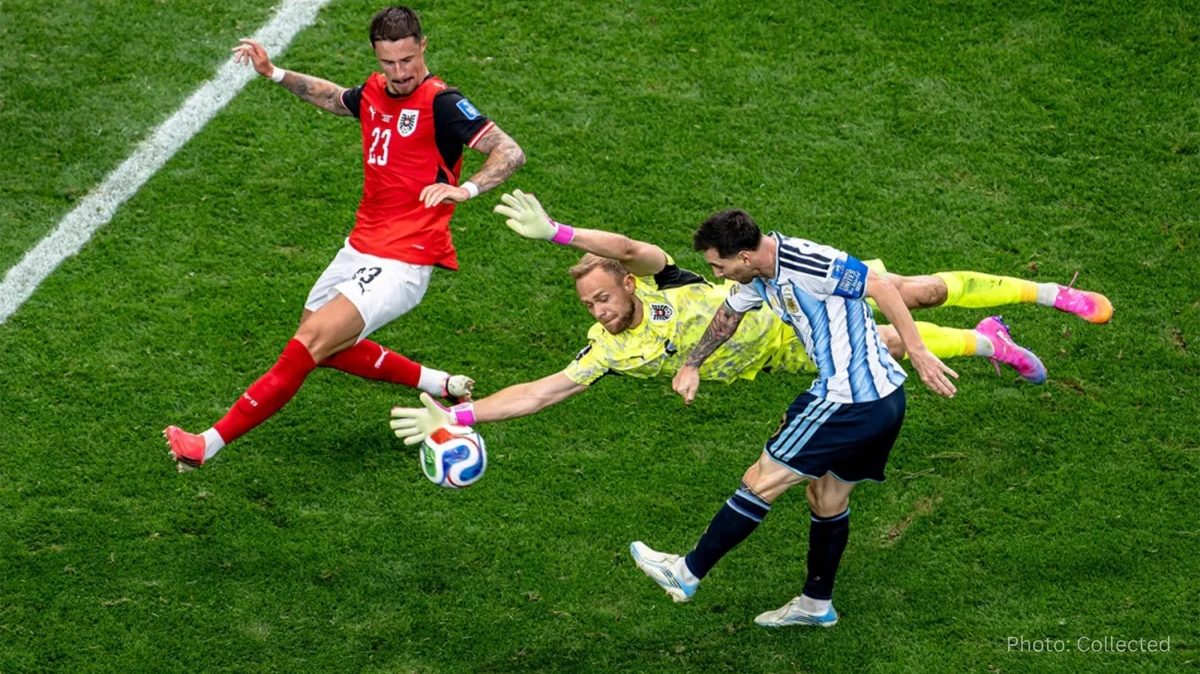
The Adidas Trionda match ball used at the 2026 FIFA World Cup is drawing increasing attention after several goalkeeping errors sparked debate over its aerodynamics. New research suggests the ball can accelerate unexpectedly at certain speeds, creating challenges even for elite goalkeepers.
The official match ball of the 2026 FIFA World Cup has become a major talking point after a series of high-profile goalkeeping mistakes raised questions about its behavior in flight. The Adidas Trionda, introduced as the tournament's official ball, is now at the center of discussions among players, coaches, analysts, and sports scientists.
Several goalkeepers have struggled to deal with shots that appeared routine at first glance but ultimately resulted in goals. Among the most notable incidents were mistakes involving Algeria goalkeeper Luca Zidane, who conceded goals against both Argentina and Jordan after failing to secure shots that many observers believed were saveable.
The growing debate intensified after former England goalkeeper Joe Hart suggested that the ball may be moving faster than expected once it leaves a player's foot. According to Hart, many goalkeepers are still adapting to the characteristics of the new ball and could require additional time to fully understand its movement patterns.
Sports scientists have now provided evidence that may support those concerns. A recent academic study conducted by researchers from South Korea and Japan examined the aerodynamic behavior of the Trionda through extensive wind-tunnel testing. The research found that the ball experiences a phenomenon known as a “drag crisis,” a condition that can significantly alter its speed and flight characteristics.
According to the study, when the ball reaches a specific velocity range, airflow around its surface changes from a smooth pattern to a turbulent one. This transition reduces aerodynamic drag, allowing the ball to travel faster than expected. As a result, goalkeepers may misjudge the speed of incoming shots, leading to delayed reactions and handling errors.
Researchers noted that the Trionda’s design plays a crucial role in this behavior. The ball features a four-panel construction with deep seams, a departure from previous World Cup balls that used a greater number of panels. These design elements influence airflow and can trigger the drag-crisis effect at lower speeds than seen with some earlier footballs.
The study also revealed that the ball’s behavior can vary depending on how it is struck. Shots taken from different points on the ball’s surface may experience slightly different aerodynamic responses. This means that two seemingly identical strikes could travel differently through the air, adding another layer of complexity for goalkeepers attempting to anticipate the ball’s trajectory.
Despite the concerns, FIFA and Adidas have defended the ball’s design. Before its introduction, the Trionda reportedly underwent hundreds of laboratory tests to ensure consistency, stability, and performance under various playing conditions. Tournament organizers highlighted the ball’s advanced construction, stating that it was designed to deliver a more predictable and balanced flight path while maintaining high levels of control for players.
The debate has inevitably drawn comparisons with the infamous Jabulani ball used during the 2010 FIFA World Cup in South Africa. That ball received widespread criticism from goalkeepers and players because of its unpredictable movement. Some of the world’s top goalkeepers at the time openly questioned its suitability for elite competition.
However, experts note that the situation surrounding the Trionda appears different. While the Jabulani was criticized primarily for sudden changes in trajectory, the current concerns focus more on speed and the timing of the ball’s movement rather than dramatic directional shifts.
As the World Cup progresses into its knockout stages, goalkeepers are expected to continue adapting to the ball’s characteristics through training and match experience. Coaches and analysts believe that familiarity will reduce mistakes over time, although the Trionda is likely to remain a subject of discussion throughout the tournament.
With every crucial save and every costly error magnified on football’s biggest stage, the performance of the World Cup ball itself has unexpectedly become one of the competition’s most closely watched stories.
Related News



You may like




Tom Holland Says Marvel Has a Plan for the Next Spider-Man
August 1, 2026
Elected News
-
Bangladesh Seeks UN Women Support on Digital Harassment and Women’s Empowerment
-
Bangladesh, Australia Discuss Human Trafficking, Irregular Migration and Rohingya Crisis
-
Bangladesh Plans Internet-Free Access to Mobile Banking and Financial Apps
-
DU to Open Undergraduate Admission Applications on 11 November, Tests Begin 5 December


